
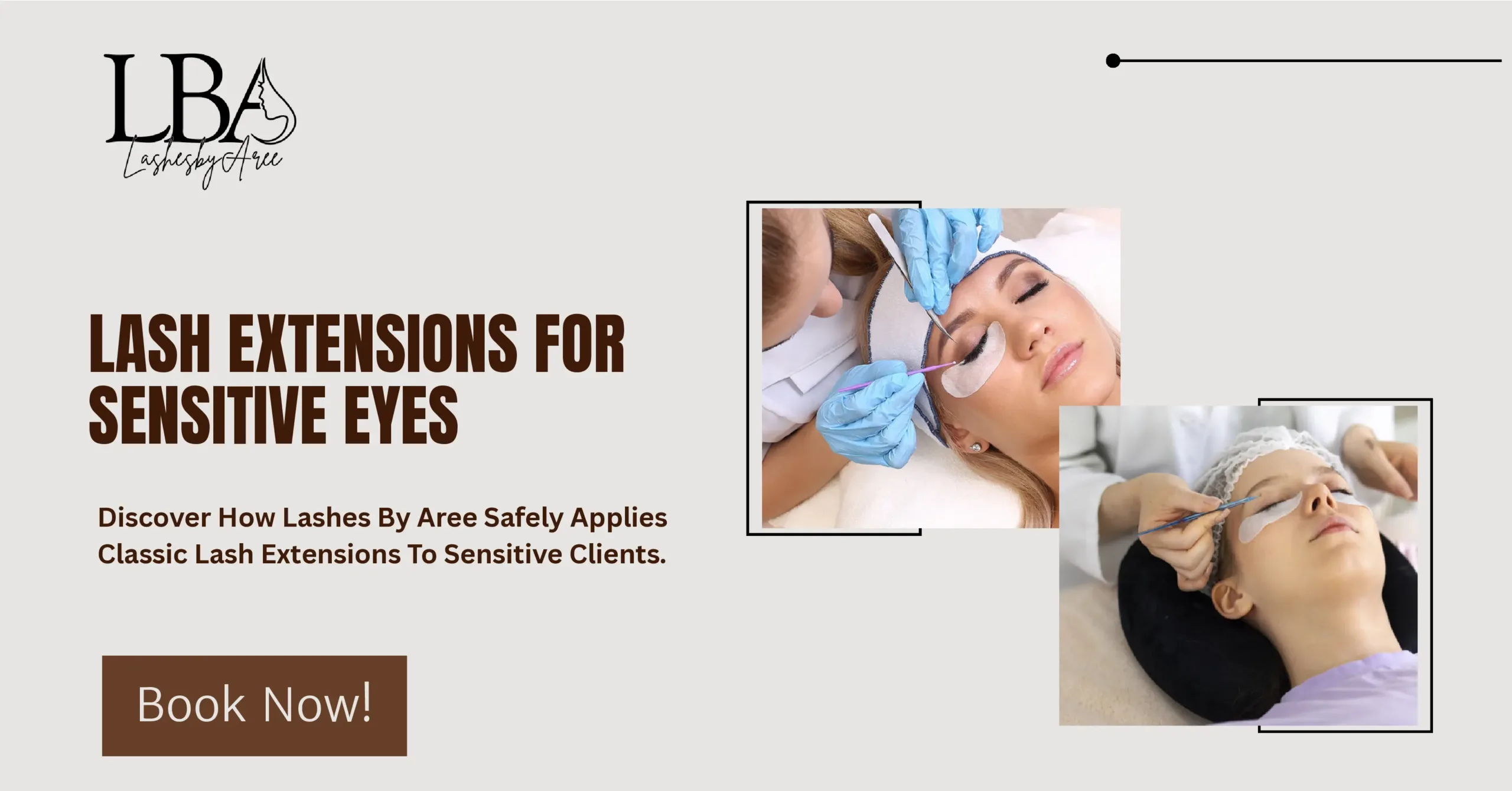
Lash Extensions for Sensitive Eyes: A Simple Safety Guide
Many people with sensitive eyes can wear lash extensions comfortably. But there is no way to promise it, and the glue is the most common cause of trouble.
If your eyes get red, itchy or watery easily, this guide is for you. It explains why reactions happen, how to tell irritation from an allergy, how a patch test works, and what to ask your artist before you book. This is general information, not medical advice. If you have an eye condition or past reactions, talk to your eye doctor first.
Are Lash Extensions Safe for Sensitive Eyes?
For most people, yes, when they are applied carefully with the right products. But safe does not mean risk-free. Even skilled artists cannot rule out a reaction, so preparation matters.
Three things lower your risk the most:
- The adhesive: The glue causes most reactions, not the extensions themselves.
- The technique: Glue on the skin or poor lash separation can cause irritation.
- A lighter, simpler set: Less weight and fewer lashes put less strain on the lash line.
What Causes a Reaction to Lash Extensions?
Most reactions trace back to the adhesive or to how it was applied. Here are the common causes.
- Fumes: Lash glue releases fumes as it dries. These can make eyes sting, burn and water. This is irritation, not an allergy.
- Cyanoacrylate: This is the bonding agent in most lash glue. A true allergy to it is rare, but it can happen.
- Carbon black: This pigment makes black glue dark. Some people react to it, and a clear adhesive can be an option.
- Latex: If you have a latex allergy, ask for a latex-free adhesive.
- Glue on the skin: Glue that touches the lid can irritate it. Careful lash isolation prevents this.
- Buildup over time: Dirt or bacteria on lashes and glue can irritate the eye if you skip cleaning.
- Existing eye problems: Eyelid inflammation, called blepharitis, can make lashes harder to wear.
Is It an Allergic Reaction or Irritation?
The timing is the biggest clue. Irritation shows up fast and fades. An allergic reaction often builds over a day or two and does not go away on its own.
| Irritation from fumes or products | Allergic reaction | |
|---|---|---|
| When it starts | During or soon after the appointment | Often 24 to 48 hours later, sometimes more |
| How long it lasts | A few hours to a day, as the glue dries | Keeps going or gets worse |
| What it feels like | Stinging, burning, watery or dry eyes, light sensitivity | Swollen lids, puffiness, redness, ongoing itching |
| What to do | Fresh air, cold compress, lubricating drops | Have a pro remove the lashes. See a doctor if it persists |
If you are not sure which one you have, treat it as a reaction and call your artist and your doctor.
Do Allergy-Friendly Lash Extensions Exist?
Some products are made to be gentler, but no lash extension is guaranteed allergy-proof. “Hypoallergenic” is a marketing word, not a promise.
Instead of trusting a label, ask your artist these questions:
- What adhesive do you use, and is it low-fume?
- Is it latex-free, and is a clear version available?
- Do you offer a patch test before a full set?
- How do you keep glue off my skin?
An artist who answers clearly and without pressure is a good sign.
Are Classic Lashes Better for Sensitive Eyes?
A classic set is a sensible place to start. One extension goes on one natural lash, so the set is lighter and simpler than a fuller style.
That said, the adhesive and the artist’s technique matter more than the style. No style is guaranteed to be safe for sensitive eyes. If you want to see how the sets compare, read our guide to classic vs hybrid vs volume lash extensions, or learn about our classic lash extensions.
What Is a Patch Test, and Does It Work?
A patch test lowers the odds of a surprise, but it cannot rule out every reaction. There are two common ways to do one.
- Skin patch: A tiny amount of adhesive is placed behind your ear or on your inner arm. You check it after 24 hours. Some artists say this can miss reactions that only show up near the eye.
- Lash test: A few extensions, often 5 to 10, are placed at the outer corner of one eye. You watch for redness, swelling or itching for 24 to 48 hours. If your eye stays calm, you can move on to a full set.
Ask which method your artist uses. If you have reacted to lash glue before, talk to your doctor before trying again.
What Should You Tell Your Lash Artist?
Share everything before the appointment. A good artist plans the set around it.
- Past reactions to lash glue, mascara, eye drops or makeup
- Allergies, especially to latex
- Medicines you take, including allergy pills or eye drops
- Skin or eye conditions, such as eczema, rosacea or dry eye
- Whether you wear contact lenses
- Any eye infection, irritation or swelling right now
Can You Wear Lash Extensions with Contacts?
Often, yes. Some contact lens wearers feel more sensitive to glue fumes. Tell your artist, and ask whether you should take your lenses out for the appointment. Keep your eyes closed the whole time, and fresh air or a fan helps.
How to Care for Lash Extensions with Sensitive Eyes
Good aftercare protects your eyes and helps the set last. Follow your artist’s instructions, and keep these basics in mind.
- Keep lashes dry for the first 24 hours, or as your artist advises.
- Do not rub or pick at your eyes or lashes.
- Clean your lashes daily with a lash-safe, oil-free cleanser.
- Skip oil-based makeup removers near your eyes, because oil can break down the bond.
- Fill on schedule, so overgrown extensions do not tug on your natural lashes.
For the full routine, see our lash extension aftercare guide, and our guide to how often to get a lash fill in Houston.
What Should You Do If Your Eyes React?
Act early. Do not wait and hope it passes.
- Do not rub. Rubbing makes irritation worse.
- Call your lash artist. A trained professional can remove the extensions safely. Do not pull them off yourself.
- Use a cold compress for puffiness or itching.
- Ask a doctor or pharmacist before taking an antihistamine or using drops.
- See a doctor right away if you have pain, vision changes, swelling that spreads, discharge, or symptoms that get worse or do not improve.
When it is time to take them off, our professional lash removal in Houston is the safer route. If a rough removal or reaction leaves your lashes thin, read whether eyelashes grow back.
When Should You Skip or Delay Lash Extensions?
Wait and talk to a doctor if any of these apply:
- You have an active eye infection or sore, red, swollen lids
- You had a strong reaction to lash glue in the past
- You have a medical condition affecting your eyelids or lashes
A lash lift and tint is another way to enhance your lashes without extensions. It uses its own products, so ask the same questions and consider a patch test.
How to Choose a Lash Artist for Sensitive Eyes
Look for an artist who asks questions before they apply anything. They should check your lashes, ask about your history, and explain their products in plain words.
You can learn what to look for in our guide to choosing the right lash artist in Houston. Not sure which style suits you? Start with our lash extension styles guide.
Book a Sensitive Eye Lash Consultation in Houston
Worried your eyes are too sensitive? Start with a conversation. Lashes by Aree is at 14520 Memorial Dr #82, Houston, TX 77079. Book online or call (832) 758-0751. Tell us about your history, and we will talk through your options before anything goes on your lashes.